




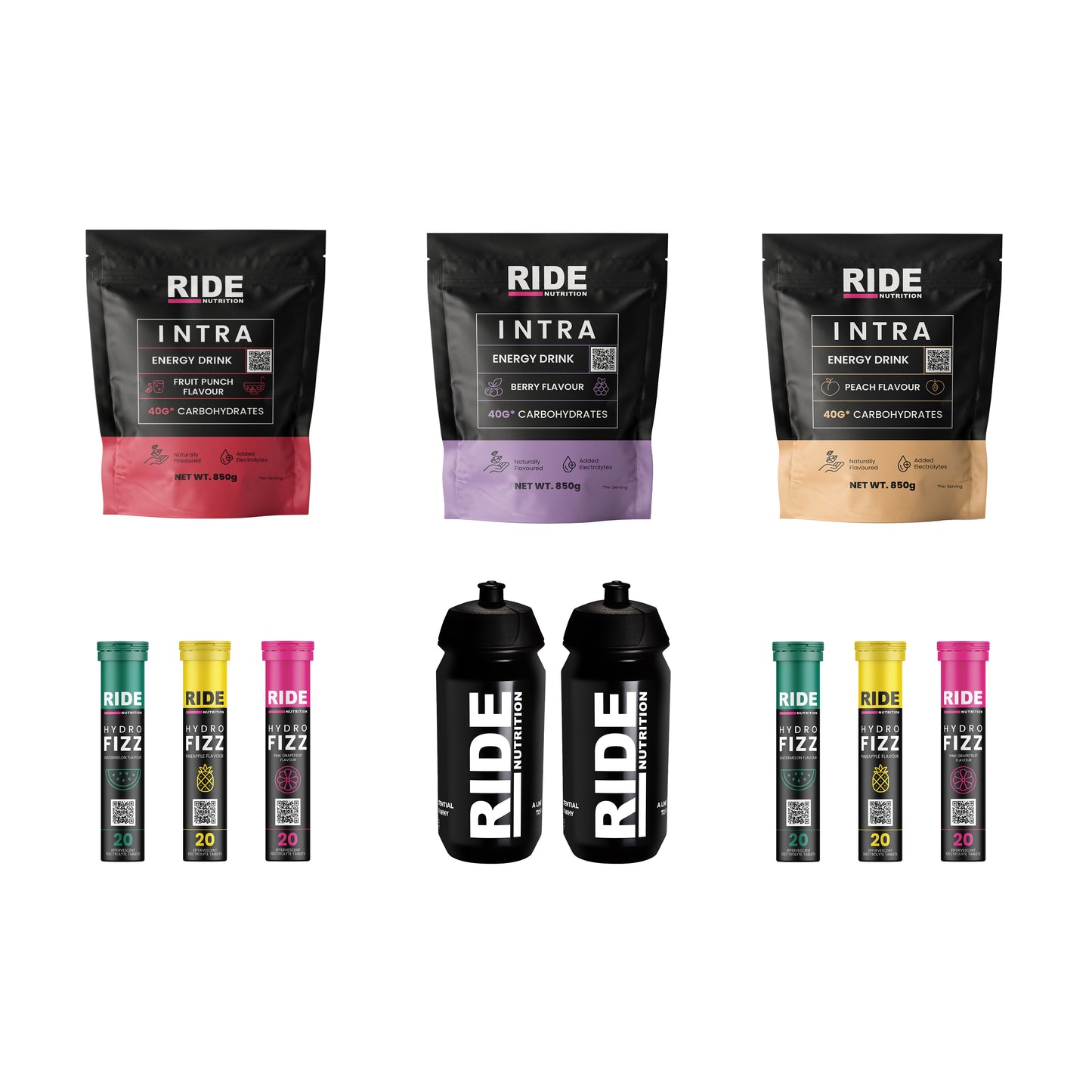


SCOTTISH SIX DAYS TRIAL FUELLING GUIDE
The Scottish Six Days Trial (SSDT) presents a demanding physiological and cognitive challenge for most of its participants. Riders are required to cover up to 100 miles per day across six consecutive days, combining endurance with repeated technical sections that demand precision, balance and control.
Each day includes a mix of public road liaisons, rough moorland, steep gullies and observed sections where riders must navigate rocky streams or boulder strewn gorges without putting a foot down (known as a dab). While the intensity of effort fluctuates, the overall workload is high and sustained, often lasting 6 to 8 hours per day.
Unlike Hard Enduro, riders are afforded more opportunities to fuel between sections due to more lenient time constraints. This creates a significant advantage, but only if a structured fuelling strategy is implemented.
The cumulative nature of the event means that energy depletion, dehydration and cognitive fatigue compound across multiple days, making nutrition a critical component of performance.
PHYSIOLOGICAL DEMANDS OF THE SSDT
Riding the SSDT combines :
- Sustained low to moderate intensity riding during liaisons
- Repeated high intensity efforts & prolonged isometric contractions during technical sections.
- Continuous neuromuscular control and balance adjustments
These demands result in:
- Progressive depletion of muscle glycogen
- Elevated carbohydrate oxidation during repeated efforts
- Neuromuscular fatigue affecting coordination and precision
- Ongoing fluid and electrolyte loss
- Muscle damage and oxidative stress
Without adequate fuelling and re-fuelling, riders may experience :
- Onset of fatigue & muscle cramps
- Reduced motor control and balance
- Slower reaction times and impaired decision making
- Increased perceived effort
- Slower recovery & delayed onset muscle soreness
Optimising your pre, during and post exercise nutrition can be pivotal to maintaining a high level of performance across all six days.
ENERGY DEMANDS AND CARBOHYDRATE UTILISATION
During an event such as the SSDT, energy is derived primarily from carbohydrate oxidation during higher intensity efforts, with a contribution from fat metabolism during lower intensity riding.
Carbohydrates are stored as glycogen in the muscle and liver :
- Muscle glycogen approximately 400 to 500 grams
- Liver glycogen approximately 80 to 100 grams
It can be expected that stores will only last for roughly 60 minutes of exercise before levels drop, depending on the exercise intensity (Ivy, 2000).
When glycogen stores are low the body then relies more heavily on the oxidation of fat stores to generate energy. However fatty acids are a much more slowly released energy store, hence the onset of fatigue when training at high exercise intensities with depleted glycogen levels.
PRE EVENT FUELLING STRATEGY
36 TO 48 HOURS BEFORE COMPETITION
To maximise glycogen stores prior to the event, increase carbohydrate intake to approximately 10 to 12 grams per kilogram of body mass per day.
This approach supports :
- Maximisation of muscle glycogen stores
- Maintenance of liver glycogen levels
- Improved endurance capacity across long durations
Carbohydrate sources should be distributed evenly across meals and snacks to optimise absorption and minimise gastrointestinal discomfort.
Hydration should also be prioritised. Consuming fluids regularly with added electrolytes helps maintain plasma volume and supports efficient thermoregulation.
Using Hydro Fizz Electrolyte Tablets during this period can assist in maintaining sodium balance and improving fluid retention ahead of activity.
PRE RIDE MEAL (BREAKFAST)
To further optimise glycogen availability before each day of riding, consume a carbohydrate rich meal 1 to 4 hours prior to the start.
Aim for :
- 1 to 3 grams of carbohydrate per kilogram of body mass
This meal should be:
- Low in fat to promote faster gastric emptying
- Moderate to low in fibre to reduce gastrointestinal stress
- Based on low to moderate GI carbohydrates to provide a sustained release of glucose
Low GI carbohydrates produce a smaller insulin response, helping to :
- Maintain more stable blood glucose levels
- Reduce the likelihood of energy crashes
- Support a more gradual utilisation of glycogen stores
Examples of low to moderate GI carbohydrates include legumes, whole grains, non starchy vegetables, yoghurt and whole milk. Porridge and muesli are great breakfast options.
Hydration should again be prioritised in this window, sipping little and often to start the day in a hydrated state.
PRE RIDE SUPPLEMENTATION
NITRATES
Dietary nitrates increase nitric oxide production, which plays a key role in :
- Vasodilation and improved blood flow
- Enhanced oxygen delivery to working muscles
- Reduced oxygen cost of sub maximal exercise
- Improved muscle contractility
Many top level athletes use nitrate supplementation strategies to help prevent the onset of arm pump. A likely theory is that elevated nitric oxide levels will help reduce the onset of arm pump by increasing blood flow to and from the muscles.
This is achieved through increased vasodilation (widening) of the blood vessels thereby the increasing the volume of blood and therefore oxygen made available for the working muscles. As more oxygen is made available for the muscles, the onset of anaerobic glycolysis and its acidic by-products is delayed during exercise.
Pre Load Nitrate Blend provides a concentrated nitrate source and is best consumed 2 to 3 hours prior to riding to allow nitric oxide levels to peak.
BETA ALANINE
Beta Alanine is a non essential amino acid that increases intramuscular carnosine levels.
Carnosine acts as a buffer, helping to regulate pH within muscle cells by reducing hydrogen ion accumulation during high intensity efforts.
In the context of Trials riding, this is particularly relevant during :
- Repeated high intensity movements during longer technical sections
- Short bursts of high intensity effort
- Moments where muscle fatigue begins to impact control
Supplementation supports :
- Improved performance in efforts lasting 1 to 10 minutes
- Enhanced tolerance to repeated high intensity efforts
- Reduced muscle acidity and delayed fatigue
Beta alanine requires chronic supplementation over several weeks to be effective.
CARBOHYDRATE INTAKE DURING THE EVENT
To maintain blood glucose levels and sustain performance, as a baseline target aim to consume :
- 40 to 60 grams of carbohydrates per hour
High GI carbohydrates are recommended during activity as they :
- Provide a rapid increase in blood glucose
- Are quickly absorbed and utilised by working muscles
When selecting carbohydrate sources, combining multiple transportable carbohydrates such as maltodextrin and fructose can increase absorption rates when ingesting higher amounts per hour.
By gradually practising your fuelling strategy using products such as RIDE Intra Carb Bars, Intra Energy Gels, Intra Carb Drink Mix and Hydro Fizz Electrolytes, action sports athletes can train their digestive system to tolerate higher fuel and fluid loads.
The result is simple. Less stomach distress, better energy availability and stronger performance when it matters most.
PRACTICAL FUELLING STRATEGY
Carbohydrate intake should be distributed in small, frequent doses to optimise absorption and minimise gastrointestinal discomfort.
A practical SSDT strategy :
Every 20 to 30 minutes:
- Consume approximately 20 to 30 grams of carbohydrates
This can be achieved through a combination of fluids, gels and solid foods depending on carrying capacity during the event
LIQUID FUELLING
Using a hydration bladder allows for consistent intake without interrupting riding flow. It's common for many riders to fill their hydration backpack bladder with a carbohydrate + electrolyte solution.
For example, our refreshing INTRA Carb Mix provides a fast absorbing carbohydrate source plus added electrolytes that can be sipped regularly throughout exercise. This supports :
- Stable blood glucose levels
- Reduced risk of energy dips
- Improved hydration status
Please note - sipping little and often is particularly effective for riders prone to gastrointestinal discomfort.
GEL BASED FUELLING
Gels provide a convenient and efficient way to meet hourly carbohydrate targets without requiring large volumes of fluid.
Our Intra Energy Gels deliver 32 grams of carbohydrates per serving and can be consumed in seconds!
These are particularly useful:
- If you don't want the weight of carrying carbohydrate solution
- When rapid energy delivery is required
- When fluid intake alone is insufficient to met carbohydrate requirements
SOLID CARBOHYDRATE SOURCES
Due to the more relaxed nature of Trials compared to Hard Enduro and Motocross, riders can incorporate solid foods more easily!
Our Intra Carb Bars provide 40 grams of carbohydrates in a light, easy to consume rice crispie format.
Solid options are beneficial :
- During relaxed liaisons
- At planned stops
- To satisfy hunger
Combining multiple carbohydrate formats helps reduce flavour fatigue and improves overall intake compliance.
HYDRATION AND ELECTROLYTE REPLACEMENT
Fluid loss occurs continuously throughout the day via sweating. As we know, the weather in the Scottish Highlands can be cruel. However emphasis should still be placed on regular fluid / electrolyte replacement throughout six days of potential rain and cooler temperatures.
As dehydration progresses :
- Blood plasma volume decreases
- Heart rate increases
- Thermoregulation becomes less efficient
- Perceived effort rises
Electrolytes, particularly sodium are lost through sweat and are essential for :
- Maintaining fluid balance
- Supporting nerve function
- Facilitating muscle contraction
Failure to replace electrolytes can result in :
- Reduced hydration efficiency
- Muscle cramps
- Increased fatigue
- Reduced performance
Hydro Fizz Electrolyte Tablets provide a balanced electrolyte profile (Sodium, Potassium, Magnesium & Calcium) to support hydration and muscle function.
As the Intra Carb Mix already contains a significant electrolyte profile when used during exercise, we often see the Hydro Fizz range used before and after exercise to restore hydration status.
END OF DAY RECOVERY
Given the multi day nature of SSDT, recovery strategies are critical to ensure you can attack each day feeling as fresh as possible.
Within 20 to 30 minutes of finishing riding :
- Repair with protein
- Refuel with carbohydrates
- Rehydrate with fluids and electrolytes
Our Reload Recovery Mix combines carbohydrates, protein and electrolytes in one delicious shake, making it a practical option when a full meal is not immediately available.
This timing aligns with the body’s increased sensitivity to nutrient uptake following exercise.
IN CONCLUSION
The Scottish Six Days Trial is a test of both physical & mental endurance, precision and consistency. Given there is only one very limited food stop per day, it is essential that riders are organised and plan ahead with their nutrition strategies.
A well structured fuelling strategy allows riders to :
- Maintain cognitive sharpness and decision making
- Preserve coordination and balance within sections
- Reduce fatigue accumulation across multiple days
- Optimise recovery between off-road days
Unlike more intense formats, Trials provides the opportunity to fuel effectively throughout the day. Riders who take advantage of this through consistent carbohydrate intake, hydration and recovery strategies will place themselves in the strongest position to perform across all six days.