






Train Your Gut Like You Train The Body
As action sports athletes, we carefully plan our training, monitoring workload, intensity and recovery, yet one critical factor is often overlooked the gut.
Reports show that up to 96% of endurance athletes experience some form of gastrointestinal (GI) distress during prolonged activity or competition. Symptoms such as bloating, cramping, nausea and diarrhoea are surprisingly common and can derail both training and performance.
GI issues become more likely during longer sessions or events when fuel and fluid intake increases. Many athletes show up training / events with packs loaded with gels, bars and drinks but with a digestive system that has never been trained to process them properly.
The causes of GI stress are complex. During intense exercise, blood flow is diverted away from the digestive system, gut motility can slow, intestinal permeability may increase and the gut microbiome can shift. When fuelling strategies are poorly planned or unfamiliar, these physiological stresses are amplified.
However, it's not all bad! The gut is actually highly adaptable. Like muscles in the rest of our body, it responds to repeated stimulus. Practising fuelling and hydration strategies in training can stimulate adaptations that improve carbohydrate absorption, increase fluid tolerance and significantly reduce gastrointestinal distress.
What is Gut Training?
Recent research has highlighted the benefits of gut training the process of systematically practising your competition day fuelling strategy during training.
A 2023 systematic review by Martinez et al. showed that just two weeks of gut training with 30–90g of carbohydrate per hour reduced gut discomfort by up to 47% and carbohydrate malabsorption by 45–54%, leading to improved tolerance and performance.
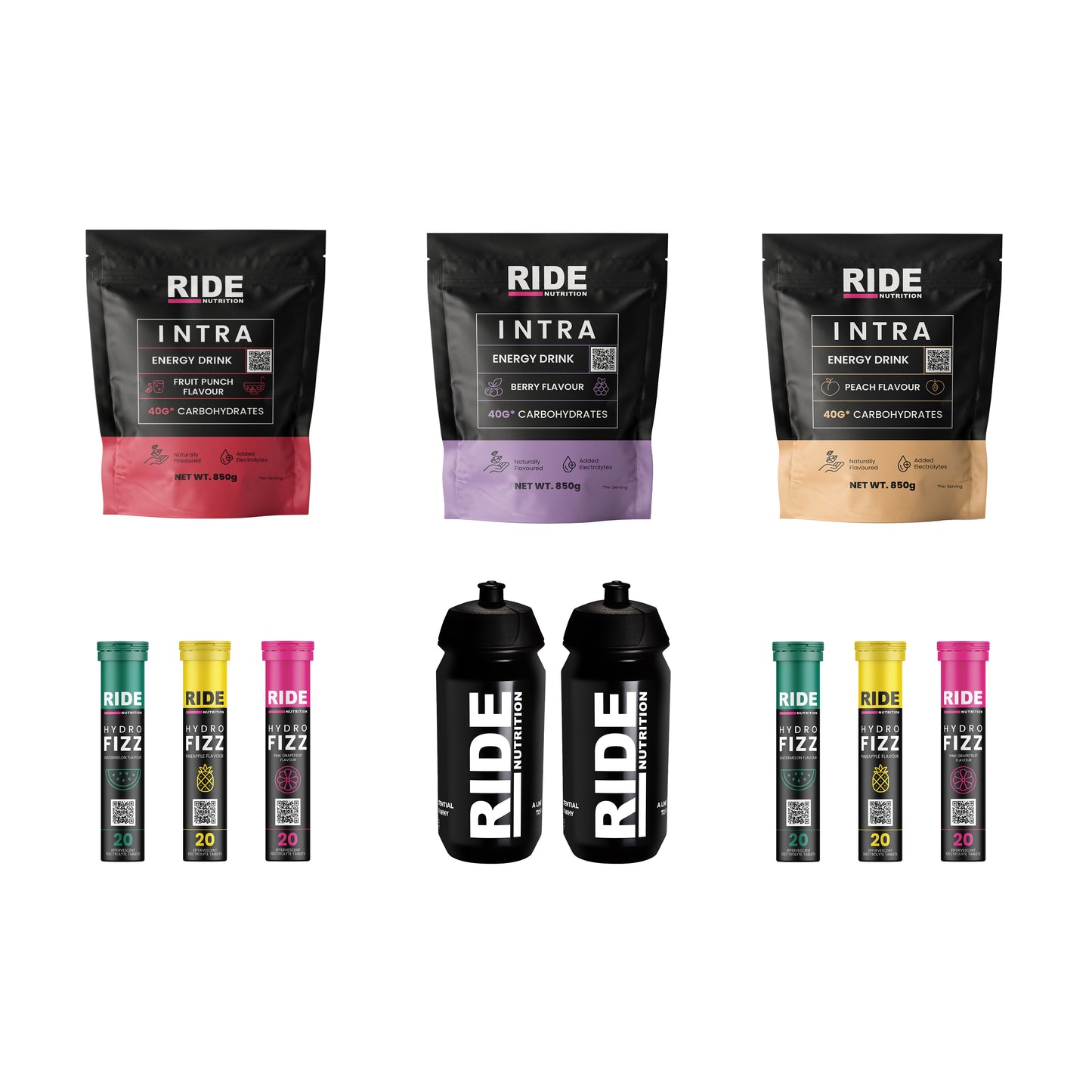
Consuming multiple transportable carbohydrates such as the dual maltodextrin / fructose blend found in the RIDE Intra Energy Gel and Intra Carb Drink Mix, allows carbohydrate oxidation rates to exceed 90g per hour, helping athletes maintain energy output while reducing GI symptoms.
The key physiological adaptations associated with gut training include :
- Enhanced carbohydrate absorption via up regulation of SGLT1 and GLUT2 transporters.
- Improved gastric emptying due to better tolerance of fluid and volume.
- Reduced malabsorption and gastrointestinal distress through desensitisation and improved motility.
Practical Gut Training Strategies
Start early and progress gradually. Begin gut training at least six weeks before your key event.
Start with around 30g of carbohydrate per hour during longer training sessions and gradually increase this each week until you reach your target intake.
Using structured fuelling products with set carbohydrate values can help make this progression easier, such as :
- RIDE Intra Energy Gel during training sessions
- RIDE Intra Carb Drink Mix to add carbohydrates through fluids
This gradual exposure allows the digestive system to adapt to higher fuel loads.
Practise Timing & Volume
Fuel is rarely consumed all at once during competition. Instead, aim to take in 10–30g of carbohydrate every 20 minutes alongside 200–300 ml of fluid.
During longer training sessions, practise this rhythm using combinations such as :
- RIDE Intra Energy Gel every 20–30 minutes
- RIDE Intra Carb Drink Mix in bottles or hydration packs
- Hydro Fizz Electrolytes to support hydration and sodium replacement
Repeated exposure helps improve gastric emptying and carbohydrate absorption.
Manage Fibre and Fat
High fibre and fat intake can slow digestion and increase the likelihood of stomach discomfort during activity so avoid foods high in these macronutrients.
Many athletes benefit from a carbohydrate-rich snack such roughly 60 minutes before an activity to top up carbohydrate stores without overloading the gut, our Intra Carb Bar range is perfect for this! Delivering 40g of carbohydrates whilst being low in protein, fat and fibre.
Hydrate Strategically
Hydration needs vary widely between athletes, but many require around 500–700 ml of fluid per hour during prolonged activity, alongside 500–700 mg of sodium per hour, depending on sweat rate and environmental conditions.
Combining RIDE Intra Carb Drink Mix for carbohydrates with Hydro Fizz Electrolytes for sodium can help athletes meet these needs while supporting gut training.
Track What Works
Many athletes meticulously track training sessions but overlook fuelling data.
Keeping a simple fuelling log. Noting what was consumed and how the gut responded can be extremely valuable. Over time, this helps refine your strategy and build confidence in your competition day nutrition plan.
Why Gut Training Matters
Research consistently shows that athletes who practise their fuelling strategies during training experience:
- Improved carbohydrate absorption
- Greater tolerance of fluid intake
- Reduced gastrointestinal distress
- Improved endurance performance
Even a short period of consistent gut training can produce meaningful adaptations.
The Takeaway
Gut training may not be the most glamorous aspect of preparation, but it can be a critical factor in competition performance.
By gradually practising your fuelling strategy using products such as RIDE Intra Carb Bars, Intra Energy Gels, Intra Carb Drink Mix and Hydro Fizz Electrolytes, action sports athletes can train their digestive system to tolerate higher fuel and fluid loads.
The result is simple. Less stomach distress, better energy availability and stronger performance when it matters most.