






Hard Enduro Guide - Fuelling For Maximum Performance
Hard Enduro places extreme metabolic demands on the body. Riders maintain elevated heart rates for several hours while performing repeated high-intensity efforts over a prolonged race duration.
Events commonly last 3–4 hours per day, often across multiple stages with longer 'Rally' style events lasting 6-8 hours over the course of multiple days. Riders are often met with challenges such as lifting the bike, climbing steep terrain, navigating technical obstacles and hitting faster trails at speed. This sport really isn't for the feint hearted!
The combination of prolonged workload and repeated bursts of high intensity efforts and enduring isometric contractions whilst continually gripping, correcting and stabilising the motorcycle significantly depletes muscle glycogen, increases carbohydrate oxidation and results in substantial fluid and electrolyte loss via sweat.
Without a structured fuelling strategy, riders may experience :
- Depletion of glycogen stores (used for energy)
- Reduced neuromuscular output
- Slower reaction time and cognitive decline
- Increased risk of cramping and fatigue
Optimising carbohydrate intake, hydration, blood supply and acidic buffering capacity allows riders to maintain optimal performance output and concentration throughout the event.
Energy Demands of Hard Enduro
During prolonged off-road riding, energy is primarily derived from carbohydrate oxidation due to the sustained moderate-to-high intensity of the activity.
Carbohydrates are stored in the body as glycogen in muscle and liver. However, total glycogen storage is limited :
- Muscle glycogen : 400–500 g
- Liver glycogen : 80–100 g
During prolonged high-intensity exercise, carbohydrate utilisation can exceed 40–90 g per hour depending on intensity, body mass and metabolic efficiency.
If carbohydrate intake does not match expenditure:
- Blood glucose drops
- Muscle glycogen becomes depleted
- Power output declines rapidly
For events lasting several hours, regular carbohydrate intake is essential to sustain performance.
Pre-Event Fuel Strategy
The goal before competition is to maximise glycogen availability and ensure adequate hydration.
36–48 Hours Before Racing
In order to maximise muscle and liver glycogen stores we recommend to increase daily carbohydrate intake to 10-12g per kg of body mass 36-48 hours prior to the competition.
Pre-event Meal
In order to top up those glycogen levels further, consume a carbohydrate rich meal 1-4 hours prior to competition. Aim to eat 1-4g of low GI carbohydrates per KG of body mass in this final ‘meal’.
This meal should be low in fats and proteins as these macronutrients take much longer to digest and may result in gastrointestinal stress during exercise.
We recommend to eat low GI carbohydrates before exercise as low-GI foods cause a lower insulin response compared to high-GI foods. This means huge blood glucose spikes and subsequent slumps are avoided before exercise.
Additionally insulin inhibits fat oxidation during exercise, therefore the consumption of low-GI foods is thought to allow for increased utilisation of fats and lower carbohydrate usage which helps to preserve glycogen stores
Hydration should also be prioritised. Consuming fluids regularly with added electrolytes helps ensure normal plasma volume and prevents starting the race in a dehydrated state.
Using Hydro Fizz Electrolytes from the RIDE Nutrition range can help maintain sodium levels and support fluid absorption.
Pre-Race Supplementation
Certain supplements can support performance when used in training and prior to competition.
Nitrates
Nitrates increase nitric oxide production, improving :
- Blood flow, delivery of oxygen to the working muscles
- Muscle contractility
- Oxygen cost of sub maximal exercise
Many riders also use nitrate supplementation to mitigate the onset of arm pump related systems, for more information on arm pump and solutions read our blog
Our Pre-Load Nitrate Blend is a great tasting nitrate super source, ideal for use before your chosen sporting activity. Say goodbye to bitter tasting beetroot based products! Nitrate supplementation is typically consumed 2–3 hours before activity to allow nitric oxide levels to peak.
For more information on the use of nitrates to improve performance, read our blog
Beta-Alanine
Beta-alanine is a naturally occurring non-essential amino acid. Unlike other amino acids, it doesn’t directly build proteins. Instead, its primary function is to boost levels of carnosine in the muscles.
Carnosine acts as a buffer - it helps to stabilise the pH in your muscle cells by reducing the build-up of hydrogen ions that cause acidification during intense exercise. In simpler terms: it helps your muscles stay in the game longer before they start to burn out.
When you supplement with beta-alanine, you increase the amount of carnosine your muscles can store, which improves your ability to perform at a high intensity for extended periods.
Hard Enduro demands a mix of aerobic endurance and anaerobic power. Think pushing up the final climb of a 4 hour race or battling for that podium position on the last lap of a faster track. High intensity situations like these can elevate hydrogen ion levels, decreasing the PH of the muscle environment and causing fatigue.
Beta-alanine delays this fatigue, allowing for :
- Improved performance in efforts lasting 1 to 10 minutes
- Enhanced power output during repeated sprints or climbs
- Reduced muscle acidity, helping you recover faster between efforts
Beta-alanine works through chronic supplementation, typically over several weeks.
For our unflavoured Beta Alanine we advise the following :
Add 4g (2 scoops) into at least 200ml of water, mix and drink. Use once daily at any given time. Mix with water, juice, shakes or smoothies.
*This product may cause parathesia (tingling sensation), which although harmless may be found uncomfortable.
Carbohydrate Intake During the Event
To ensure adequate glucose availability aim to consume 40-60g of high GI carbohydrates for every hour of exercise completed. This guidance provides athletes with a base figure to trial and test during training – slight tweaks may need to be made in accordance to athlete weight and training intensity.
As noted, high GI carbohydrates should be ingested during exercise as they cause a rapid increase in blood glucose levels which can be quickly absorbed into the muscles for energy.
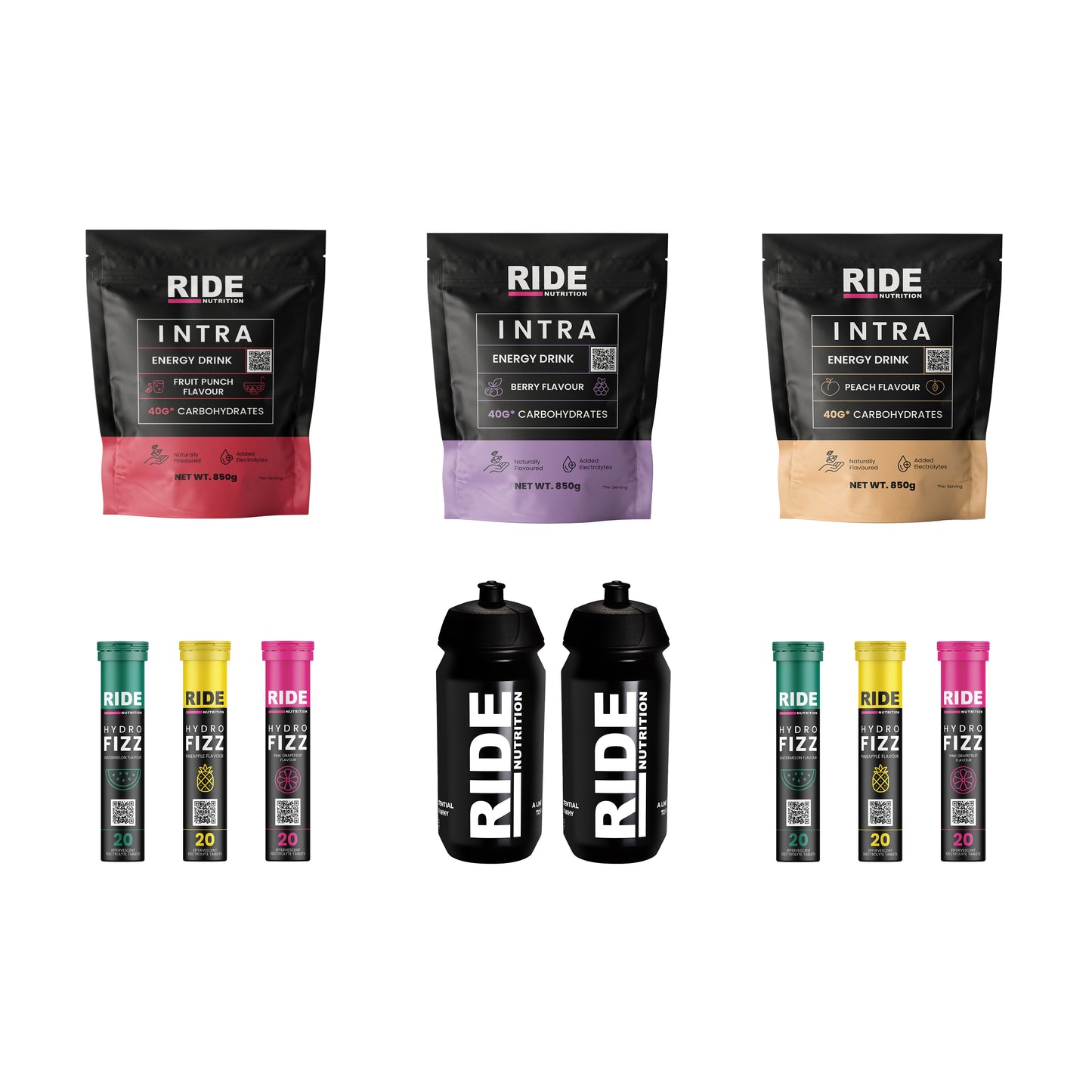
When choosing a carbohydrate drinks mix, lookout for options delivering multiple transportable carbohydrates - maltodextrin and fructose. If you haven't already, check out our INTRA Carb Mix range. Specially formulated to help sustain performance levels and enhance hydration status during endurance exercise.
Different proteins are used to transport such carbohydrates simultaneously, thus resulting in an increased rate of carbohydrate delivery and absorption at the muscles (Potgieter, 2013).
Upwards of 90-120g per hour can be absorbed and delivered to working muscles when using a multiple energy substrate compared to using maltodextrin alone. With this being said, when ingesting higher levels of carbohydrates per hour, the chances of experiencing gastrointestinal stress increases.
Practical Fuelling Strategy
Carbohydrates should be consumed in small, frequent doses to optimise absorption and minimise gastrointestinal stress.
A practical strategy for a 3–4 hour Hard Enduro event :
Every 30 minutes
- Consume 20–30 g carbohydrates
This can be achieved through a combination of liquids and gels or bars if time is available.
As mentioned, the Intra Carb Mix range from RIDE Nutrition provides a fast-absorbing carbohydrate drink that can be carried in a hydration bladder and easily consumed whilst riding via a helmet hands free system. Sipping little and often is recommended if you are susceptible to GI stress.
For more information on the gut and how to train it, read our blog.
Another means of rapid carbohydrate delivery, is through the use of our Intra Energy Gel. These pocket rockets deliver 32g of carbohydrates per serving, making it easy to achieve hourly carbohydrate targets in a way that doesn't require as much fluid consumption.
Riders who prefer solid fuel during less technical races, or during mandatory stops / liaisons can make use of our Intra Carb Bars. Crafted in the UK for athletes striving for a fast, reliable energy source without compromising on flavour. Each rice crispy based bar delivers 40g of rapid release carbohydrates in a light, taste focused, easy to chew texture.
Hydration and Electrolyte Replacement
Sweat rates during prolonged Hard Enduro rides vary depending on conditions, clothing, and individual rider physiology.
As sweat rates increase in line with exercise intensity we often see a reduction in blood plasma volume which in turn results in an increased viscosity (thickening) of the blood. The heart then has to work much harder to pump this viscous blood around the body to deliver oxygen to the working muscles, which in turn effects the intensity at which we are able to perform at.
As the body becomes dehydrated, we see a reduction in sweat rates in an attempt to save water and maintain blood plasma volume. As a result it becomes increasingly hard for the body to lose heat via evaporation and therefore core temperature will likely rise thus increasing sensations of fatigue which will have a negative impact on performance.
Essentially, as we become dehydrated our heart rate increases, muscle glycogen depletion rates increase and body temperature rises. This means we have to work harder to perform at any given exercise intensity compared to when in a fully hydrated state.
When you sweat during races, you lose both fluid and electrolytes. Sodium is typically lost in the greatest quantities, but other electrolytes such as potassium, magnesium and calcium also play important roles in muscle function and energy production.
If these losses are not replaced, several issues can arise :
- Reduced hydration levels
- Impaired muscle function
- Increased fatigue
- Greater risk of muscle cramps
- Declines in endurance performance
Electrolyte supplements such as our Hydro Fizz Electrolyte Tablets, containing a quad electrolyte blend can help support hydration and electrolyte balance during your ride.
Due to the fact that Enduro riders typically only carry one drinks bladder whilst racing, we made sure to add electrolytes to our Intra Carb Mix. As a result, most riders racing for 60 minutes or longer will add Intra Carb Mix directly to their hydration bladders, allowing them to hydrate and fuel simultaneously without needing to carry a separate electrolyte solution.
If the temperature is extremely high and you need to pay extra attention to your electrolyte replacement, we do advise preparing a serving of our Hydro Fizz Electrolytes, ready to be consumed when pitting.
Post-Race Recovery
After intense racing or a long day out on the bike, preparing a full meal immediately may not always be practical. A recovery shake provides a quick and efficient way to start the recovery process as you head back home.
A well designed recovery drink like the Reload Recovery Mix helps address all three ‘R’s of recovery in one shake :
- Repair with protein
- Refuel with carbohydrates
- Rehydrate with fluids and electrolytes
Our Reload Recovery Mix is a great example, created specifically with this principle in mind. Providing protein, carbohydrates and electrolytes in one drink to help kick-start recovery immediately after exercise.
Consuming a recovery shake within 20–30 minutes of finishing exercise helps take advantage of the body’s optimal recovery window, when nutrients are more readily used for glycogen replenishment and muscle repair.