






The Best Supplements for Cyclists: A Complete Guide to Cycling Nutrition
Cycling is one of the most demanding endurance sports, requiring sustained energy, efficient hydration and effective recovery between sessions. Whether you're riding long endurance miles, racing on the road or tackling gravel and mountain bike trails, your body needs the right nutrition strategy to perform at its best.
While whole foods should always form the foundation of a cyclist’s diet, supplements can play an important role in fuelling rides, supporting hydration, improving performance and accelerating recovery.
The key is choosing supplements that are effective, practical to use while riding and tailored to the demands of cycling.
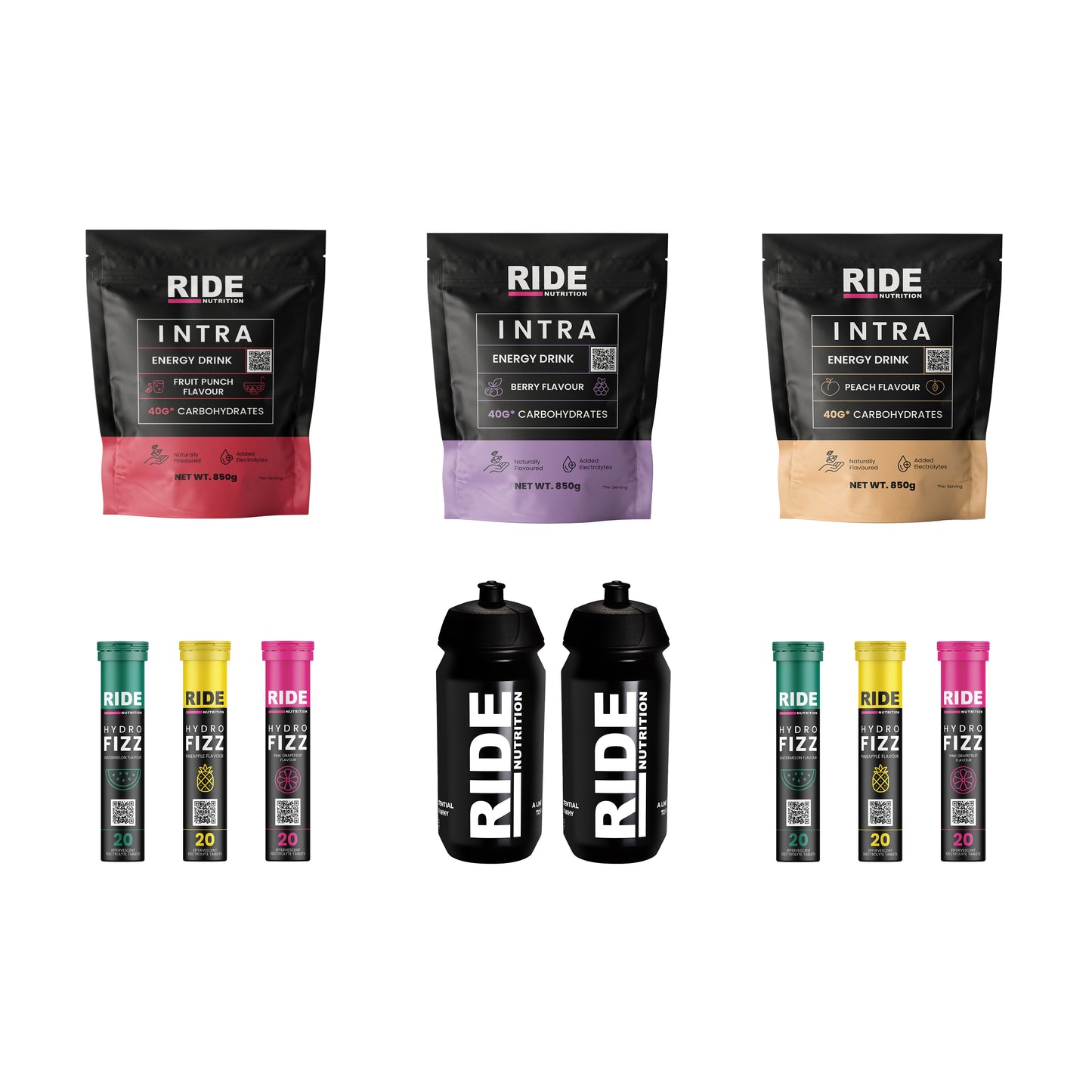
RIDE Nutrition products are designed specifically to support cyclists before, during, and after training or competition.
This guide explains which supplements cyclists benefit from most and how to use them effectively.
Why Supplements Matter for Cycling Performance
Cycling places unique nutritional demands on the body :
- Long training sessions can deplete glycogen stores
- Sweat loss can lead to fluid / electrolyte imbalance
- Intense efforts cause muscle fatigue
- Recovery becomes critical during heavy training blocks
When used correctly, cycling supplements help riders :
- Maintain steady energy levels
- Avoid dehydration & associated risks
- Delay fatigue during hard efforts
- Recover faster between rides
The most effective cycling supplements generally fall into three categories:
- Fuelling supplements (carbohydrates)
- Hydration supplements (electrolytes)
- Performance supplements (ergogenic aids)
Not every supplement is necessary for daily riding. However, several products can significantly improve training quality and recovery.
1. Carbohydrates: The Most Important Cycling Supplement
Carbohydrates are the primary fuel for endurance exercise. When glycogen stores become depleted, fatigue increases rapidly and performance drops.
Cyclists should aim to consume carbohydrates during longer rides according to intensity.
Recommended Carbohydrate Intake for Cycling
| Ride Intensity | Carbohydrates Per Hour |
|---|---|
| Easy endurance | 40g |
| Moderate training | 60g |
| Hard rides / racing | 90g+ |
Portable fuelling options make it much easier to reach these targets.
Cyclists often combine multiple sources such as:
- Intra Energy Gels - Compact gels delivering fast release carbohydrates for high intensity riding.
- Intra Carb Bars - Ideal for longer endurance rides when riders prefer solid fuel.
- Intra Carb Mixes - Allow cyclists to consume a mix of carbohydrates + electrolytes directly though one bottle
Drink based fuelling can be particularly effective during hot conditions or high-intensity racing, when eating solid foods becomes more difficult.
Using a combination of gels, bars and drink mixes helps maintain consistent energy intake and reduces flavour fatigue on longer days out.
2. Electrolytes for Hydration
During rides, cyclists lose both fluid and electrolytes. Sodium is typically lost in the greatest quantities, but other electrolytes such as potassium, magnesium and calcium are also lost - each playing important roles in muscle function and energy production.
If these losses are not replaced, several issues can arise :
- Reduced hydration levels
- Impaired muscle function
- Increased fatigue
- Greater risk of muscle cramps
- Declines in endurance performance
Hydration options include:
- Hydro Fizz Electrolytes dissolve easily in water to create a refreshing electrolyte drink
- Electrolyte Capsules allow riders to control electrolyte intake without excess fluid intake.
Capsules can be conveniently carried in the RIDE Micro Pouch, a compact pouch designed to store supplements safely in a jersey pocket.
For more in depth information on the importance of hydration read our blog
3. Beta-Alanine for High-Intensity Efforts
High intensity cycling efforts produce an acidic environment within the muscles, which contributes to fatigue during repeated sprints or climbs.
Beta Alanine helps support the body’s natural low PH buffering systems, which may improve performance during :
- Sprint efforts
- Short climbs
- Repeated attacks during races
It is typically taken daily over several weeks to build effective levels in the body. For more information on Beta Alanine read our blog
4. Creatine for Power and Sprinting
Although creatine is often associated with strength sports, it can also benefit cyclists who rely on explosive power.
Creatine Monohydrate supports rapid energy production for short bursts of effort such as :
- Sprint finishes
- Fast accelerations
- Short steep climbs
Creatine may also help support strength training sessions commonly used by cyclists during the off-season.
For more information on creatine and how it may be beneficial to your riding performance read our blog
Supplements to Take Before Cycling
Certain supplements can be useful before important training sessions or races.
Nitrates for Endurance Efficiency
The following performance benefits have been associated with increased nitric oxide bioavailability, following nitrate supplementation :
- Increased blood flow
- Reduced oxygen cost of exercise
- Enhanced muscle contractility
- Improved cognitive function
Many cyclists use nitrate supplements in the days leading up to an important event.
Pre-Load Nitrate Blend provides a convenient way to incorporate nitrates into a pre-race strategy.
For more information on the ways in which nitrate supplementation can improve your exercise performance read our blog
Caffeine for Focus and Performance
Caffeine is one of the most widely used and researched performance supplements in endurance sports.
Benefits may include:
- Increased alertness
- Reduced perception of fatigue
- Improved endurance performance
Caffeine Capsules allow cyclists to control caffeine intake precisely before or during rides.
Capsule supplements can easily be carried during races using the RIDE Micro Pouch.
Read our blog to find out more information on caffeine as an ergogenic aid.
What to Eat During Cycling
Nutrition during a ride or race is one of the most important factors affecting cycling performance.
Most riders aim to consume 60–90 grams of carbohydrates per hour, while highly trained athletes may tolerate even higher amounts. It is important to start with a relatively low carbohydrate intake per hour (30-40g), building up as the gut becomes trained to absorb greater amounts over time. What's gut training? Read our blog
Example Cycling CHO Fuelling Strategy
| Ride Duration | Carbohydrate Intake (Grams Per Hour) |
|---|---|
| 0-1 Hours | Water + small carbohydrate intake |
| 1–2 Hours | 30-60 |
| 2–3 Hours | 60–90 |
| 3+ Hours | 90–120 |
Fuelling options include:
- Intra Energy Gels for fast release energy on the move.
- Intra Carb Mixes for combining fuelling with hydration in one beverage.
- Intra Carb Bars when a solid fuel source is preferred.
Hydration can be maintained alongside carbohydrate intake with additional consumption of Hydro Fizz Electrolytes or Electrolyte Capsules depending on rider preference.
Best Supplements for Cycling Recovery
Recovery becomes increasingly important as training volume increases.
During exercise, particularly endurance sports such as cycling, the body experiences several physiological changes :
- Muscle fibres experience microscopic damage
- Glycogen stores (stored carbohydrates) become depleted
- Fluids and electrolytes are lost through sweat
If these changes are not addressed, athletes may experience fatigue, slower recovery and reduced performance in subsequent training sessions.
Research suggests that the 20-30 minutes after exercise is a key recovery window where the body is especially efficient at absorbing and utilising nutrients to repair tissue and replenish glycogen stores. This is why many athletes use a recovery protein shake immediately after training.
A convenient post-ride option is our Reload Recovery Mix, which combines carbohydrates, protein and electrolytes in a delicious on the go shake!
- Repair with protein
- Refuel with carbohydrates
- Rehydrate with fluids and electrolytes
Recovery drinks are particularly useful immediately after training, when riders may not have access to a full meal.
FAQ: Cycling Supplements
What supplements should cyclists take?
The most useful supplements for cyclists include:
- Carbohydrates
- Electrolytes
- Recovery Nutrition
- Caffeine
- Nitrates
These supplements support energy production, hydration and endurance performance.
Do cyclists need protein supplements?
Cyclists primarily need carbohydrates for performance during rides, but protein helps support recovery and muscle repair after long or intense rides.
Are energy gels necessary for cycling?
Energy gels are not strictly necessary, but they provide a convenient and easily digestible source of carbohydrates, making it easier for riders to maintain energy intake during hard efforts.
Final Thoughts
Cycling supplements are most effective when they support a well structured nutrition strategy.
For most riders, the biggest performance gains come from focusing on three key areas:
- Fuelling rides with carbohydrates
- Maintaining hydration and electrolyte balance
- Supporting recovery after training
With the right approach and products designed specifically for endurance athletes, cyclists can maintain consistent energy, perform at a higher level and recover more effectively between rides.